Skip to content

30/07/2025

Matt Tomkin

What is a Good Click-Through-Rate for Google Ads?
Finding your insurance brokers target audience

Google Ads are the fastest way to get to the top of Google’s search results. Ads that feature on Google search are placed above organic search results, meaning paid ads are the first thing searchers see.

Interestingly, most people aren’t automatically turned off by paid search, with 68.2% of UK consumers unaware that Google results are ads. Like any form of paid advertising, there’s a learning curve involved if you are going to master Google Ads.

Naturally, the click-through rate is one of the most essential parts of Google Ads. In this guide, we discuss what a good click-through rate is and how to improve it.

Understanding Click-Through-Rate (CTR) on Google Ads

Your CTR is measured by a ratio of clicks to impressions. In other words, it’s the percentage of people who click on your ad after seeing it. For a marketer, it’s a measure of how relevant their ad is and whether it’s compelling enough to encourage people to click.

With search advertising in the UK rising to £14.7 billion in 2023, the market has never been more competitive, making CTR more relevant than ever. Some of the reasons why CTR matters include:
  • Impacting the cost of your campaigns.
  • Influences the effectiveness of your campaigns.
  • Lowering your Cost-Per-Click (CPC).
  • Generating more conversions.

In short, a better CTR translates to a more effective campaign and more visitors to your site, where you can then convert them into paying customers.

How the CTR of Google Ads differs depending on the industry

CTR differs heavily by industry because every industry has an entirely different audience. The strategies that work for insurance brokers won’t work for travel agencies, as every audience responds to different marketing triggers.

If we use a WordStream study of industry CTR rates, we can see that the standout industries for average CTRs in 2024 are:

  • Arts and Entertainment – 13.04%
  • Sports and Recreation – 9.66%
  • Real Estate – 9.20%

In contrast, they found that the lowest CTRs were in the legal industry and dental services, with CTRs of just 5.30% and 5.38%, respectively. Overall, these rates have increased significantly over the past five years as Google includes more ads above the fold.

But it’s vital to mention that Google itself doesn’t release comprehensive figures on average metrics. That’s why average CTRs tend to vary heavily based on which company conducts the study, so take all numbers with a pinch of salt.

We’ve also written blogs on facebook ad CTRs, and Google Search Console CTRs.

What factors influence Google Ads CTRs?

The key to a successful CTR is producing the right ad for the right audience. The principle of great advertising doesn’t change based on the channel. But how does Google evaluate your ads, and what results in your CTR?

  • Relevance – Does your ad match user intent and use the right keywords?
  • Keywords – Are your keywords relevant to your target audience?
  • Position – Is your ad in the top position?
  • Extensions – Are you utilising callouts, links, and snippets to improve your ad’s appeal?
  • Copy – Is your ad copy encouraging searchers to click and find out more?
  • Experience – Does your landing page effectively match the promise made in your ad?

You likely recognise these factors from other marketing channels, including social media, and that’s because they are the pillars of what makes a successful ad.

What is a good click-through rate for Google Ads?

A “good” CTR depends on your industry. The traditional advice was that anywhere between 2% and 5% translated to a successful ad. However, this is only a general rule of thumb, and you must conduct your research to determine what’s “good” for your industry.

Start by deciphering the average rate. Anything above the average would be considered a good CTR. Below-average CTRs indicate that your ad either isn’t relevant or compelling. In other words, you’re not fulfilling the expectations of your target market.

Ways to improve Google Ad CTR

Google Ads have immense potential for driving results and helping you to grow your business. On a global scale, businesses that spend $1 on Google Ads see a return of $2, making mastery of this advertising channel one of the most impactful assets your company can have.

But how do you improve your CTR? Here are some starting points for boosting this metric:

Reassess your keywords

Focus on your target keywords. Your ad copy should closely align with the search terms your target market uses. Consider search intent and whether your ad matches up with what your audience wants. You can use Google Search Console to find the right keywords.

One avenue to explore is negative keywords. Instead of targeting specific keywords, you’re excluding specific keywords to prevent random clicks. It’s another tactic for refining your target audience that so many marketers miss out on.

Write better copy

Written copy must grab your audience’s attention in a few seconds. If it doesn’t, their eyes will move further down the page to your competitors. Think about whether your headline grabs their attention and whether it’s persuading them to click.

Don’t forget about ad assets

Ad assets on Google Ads are things like structured snippets, callouts, and site links. These extra media assets can improve visibility and offer extra information to provide additional value to searchers.

A/B testing

Rarely will an ad be an instant hit. The most effective marketers are constantly testing and retesting every aspect of their ads to see which performs best. Crucially, they’re doing this even when they have a successful ad.

Concentrate on aspects like:

  • Headlines
  • Ad copy
  • Images
  • Landing pages

Rework your landing page

Your landing page is part of the package. If people are clicking and immediately clicking away, Google will recognise this and penalise you, assuming you’re providing a poor-quality experience.

Effective landing pages are user-friendly and engaging and ultimately follow through on the intrinsic promises made by your ad.

Ultimately, a successful paid advertising campaign on Google consists of moving parts working together to help your business find its target audience. With so many aspects of profitable online advertising, it’s easy to feel overwhelmed.

At Tao Digital Marketing, we’re the specialists in helping UK firms across a variety of industries reach their target audience. If you’re ready to elevate your Google Ads campaign and turn traffic into conversions, contact us to find out how we can create a bespoke campaign for you.
30/07/2025

Matt Tomkin

PPC Basics for the Insurance Industry

Finding your insurance brokers target audience

Watch TV or browse the web, and it feels like insurance companies are everywhere. In this hyper-competitive market, it’s necessary because it’s both high-volume and high-revenue. And that means utilising every channel available to gain an edge.

Pay-Per-Click (PPC) advertising is one of the most powerful tools in your arsenal in this growing market, and one of the best digital marketing tools for law firms. According to one study, the PPC industry has risen by nearly 9% per year for the past five years, to achieve a market value of £21.7 billion.

Mastering PPC gives you a weapon to reach your target audience and maximise your revenues. Here’s what you need to know about PPC and how it works in the UK’s insurance business.

What is PPC for the insurance industry?

PPC advertising is a strategy where an insurance provider or agency bids for a target keyword, and each time a lead clicks on that Google search link, they’re charged for each click. How much each click costs depends entirely on the competitiveness of that keyword.

The point of PPC is to take advantage of search traffic and convert people as they visit your website. When done correctly, it can drive enormous amounts of revenue because 65% of people who click on PPC are actively looking to make a purchase.

The types of PPC strategies for insurance brokers

Insurance brokers seek keywords that yield the most results for the lowest possible cost. The goal is always the same, but refining your strategy is the tricky part. Generally, there are five major areas insurance agencies should focus on:

  • Keyword Targeting – Uncovering the keywords relevant to an audience with high-purchasing intent, while not being so competitive as to be too costly to run PPC ads on.
  • Ad Copy Optimisation – Creating clear, compelling copy that gets people to stop scrolling and click. Of course, your ad copy must reflect what they’ll find on your landing page, or they’ll click away.
  • Advanced Targeting – Using advanced targeting techniques, like geographic targeting and remarketing, to bring in people who actually convert, rather than just window shoppers.
  • Bidding Strategies – Manual bidding allows you to control budget and spending, but automation also plays a role. Refining your bidding strategies to achieve specific goals, like conversions, Return On Ad Spend (ROAS), or Cost-Per-Acquisition (CPA).
  • Landing Page Optimisation – The perfect PPC ad is irrelevant if your landing page is ineffective at convincing people to purchase an insurance policy. Tweaking with the elements on your landing page is key to not undoing all the good work you’ve done on refining your PPC ads.

Success is ultimately measured by the number of insurance policy purchases people make when clicking on your ads. What works for one insurance brokerage won’t necessarily work for yours, which is why A/B testing and constant monitoring are pivotal to your success.

How much should insurance brokers be spending on PPC?

It depends on how ambitious you are and what you want to achieve. Likewise, your geographical market and the type of insurance you’re selling will define how much you have to spend to gain traction.

However, it’s worth mentioning that although you can run PPC ads for as little as five cents per click, insurance is the most expensive industry to target. A study of the U.S. market found that insurance keywords averaged at $54.91 per click, and it’s all down to the immense spending of the big insurance companies.

The main benefits of PPC for insurance brokers

Insurance brokers stand to open up a whole new channel when integrating PPC into their ad mix. Some of the main benefits include:

  • Increased visibility
  • Enhanced brand awareness
  • Ultra-precise targeted advertising
  • Cost-effective lead generation
  • Quick results

Of course, there’s a steep learning curve to PPC. Blunder around and it’ll eat up your budget quickly, which is why insurance agencies choose to hire PPC experts to set up and run their campaigns. Tao Digital offers a number of marketing packages for insurance brokers.

Setting up a PPC campaign for an insurance brokerage: The basics

Creating your first insurance PPC campaign is simple enough. The difficulty is in refining it. If you’re new to PPC campaigns, here are the basic mechanisms for building your first campaign:

  • Decide on your goals (lead generation, brand awareness, quote requests, etc.)
  • Identify relevant keywords. The Google Keyword Planner is an ideal tool as a starting point.
  • Create your ads that highlight your selling points and fuel clicks.
  • Build dedicated landing pages to convert visitors and accurately track your results. Ensure that it matches the content of your campaign and ad.
  • Set up a budget that makes sense for you. Too low and your ads won’t appear. Too high and you risk overspending.

Although it sounds simple, the complexity of PPC ads is in testing and ensuring that your returns measure up with your spending. Like all types of ads, there’s a learning curve, so start small and scale up as you start to see results come in.

Tracking the results of an insurance broker PPC campaign

Switch on analytics and enable conversion tracking with your first campaign to see what’s working and what isn’t. It will tell you more about where you should be allocating your budget and what resonates with your target audience.

Tracking is also the key to effective A/B testing because it will tell you where to make adjustments, whether to your ad or your landing page. Plus, as you get more experience, you can begin using tracking to drill down into different metrics, such as audience demographics, location, and more.

Without tracking, you’re essentially taking a shot in the dark every time and hoping for the best.

Insurance broker PPC with Tao Digital

PPC ads are among the most powerful advertising tools for the insurance industry, but they’re also highly competitive and difficult to master. If you’re going to dislodge the competition and make a profitable return on your ad spend, you need the touch only a professional can bring.

At Tao Digital Marketing, we have the experience to steer you through the growing pains of PPC ads through our PPC management and start generating results for your insurance agency quickly. If you’re looking for a bespoke strategy that drives growth, contact the Tao team to learn more about how we can support your brokerage now.


30/07/2025

Matt Tomkin

How to Find Your Insurance Broker’s Target Audience Online

Finding your insurance brokers target audience

The bedrock of all marketing is identifying your target audience and promoting directly to them. If you’re not capturing your target audience, any traffic you gain is from people who aren’t going to buy your insurance policy in the first place.

Insurers spend countless millions on not just finding their target audience but consistently repositioning their insurance marketing campaigns to avoid them slipping away. So, what do you need to know about finding your target audience?

Why finding your target audience online is crucial

Many marketers have no idea who their target audience is, and certainly don’t have high-quality data on them. According to one marketing survey, just 65% of marketers said they possessed high-quality data on their target markets.

Discovering who your target audience is and where they are is critical to the success of any brokerage, and here’s why:

  • Increased marketing effectiveness through targeted campaigns.
  • Knowing what makes your target audience tick.
  • Building authentic customer relationships.
  • Providing personalised experiences.
  • Improve your marketing ROI by reducing wastage.

Ultimately, the more you know about your target audience, the more it will inform your decision-making, and that only leads to a more profitable marketing department for your brokerage.

Find out about the best practices for insurance broker digital marketing.

What is the typical target audience for an insurance broker?

Your typical target audience is the one that your services target directly. The good thing about insurance is that the relationship is as straight as an arrow. Your ideal client is the one directly served by your product.

For example, if you’re a car insurance broker, your target audience is obviously someone who owns a car. If you’re selling convenience store insurance, your audience is convenience store owners.

Of course, it’s more complex than that. Someone looking for car insurance might be looking for comprehensive insurance if they have a family. In contrast, young drivers who have just passed their tests usually just look for the cheapest policy.

The challenge for insurance brokers is continuing to align their products with an audience whose needs are constantly changing, and that’s where so many brokers start falling short.

How to define and segment the target audience for a brokerage online

Due to the strength of the UK market in general, insurance brokers have an enormous market to choose from nowadays.

For example, did you know that 43% of SME insurance policies are now purchased through brokers, rather than through insurers?

Taking advantage of this means defining who your target audience is and segmenting your campaigns to better speak to the individuals within that audience. Here’s a breakdown of how to do it.

Define what your target customer is like

Before you begin your insurance content marketing strategy, or any other kind of insurance marketing approach, list the characteristics of your ideal customer. These are customer personas, consisting of pre-established ideas of who your perfect customer is. Much of this will depend on the products your brokerage sells.

For example, you might be targeting policies at a specific socio-economic background or a particular part of the UK. Likewise, your policies may be tailored to those with a specific issue.

The idea at this stage is to build those personas, so that you have your perfect customer and any marketing campaign will be aimed at those who’re 100% interested in what you’ve got to offer.

Deciding on target customer values

The same market can have customers all with different needs. You can’t answer every need, so you have to consider those needs you can serve.

It might be that your brokerage specialises in affordable, low-cost policies. Alternatively, you may be someone who wants to stand out through the strength of your customer service. Likewise, other parts of your audience may prefer brokers with strong automation and tech-powered services.

So, what does the customer want that your insurance firm provides?

Talk to your customers

The quantity of spending means nothing if you aren’t pushing the right buttons. With insurance companies spending up to 10% of revenues on marketing, this is something you must get right immediately. Take the time to speak to your customers to find out what buttons you have to push to get them to buy.

You’ve got multiple sources of information here:

  • Previous customers
  • Current policyholders
  • Prospects speaking to you for the first time

Talk to them about their experiences, what they like, and what they don’t like. Yes, it’s a data-gathering exercise, but it also has the dual benefit of showing how much you care about your customers.

Establish key segmentation criteria

All marketing can be parsed down to data. The more data you have, the more accurate and reliable your insights will be. It’s an ongoing process that should be regularly reviewed and interpreted to confirm that your insurance marketing direction remains relevant.

Most insurance brokers will have several ideal customer personas. You can’t hit everyone at once, so building tailored campaigns for each persona is crucial. Let’s start with different segmentation criteria:

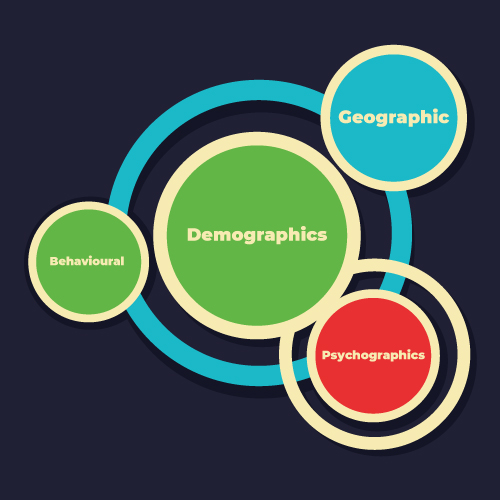
  • Demographics – Age, gender, income, occupation, education
  • Geographic – Location
  • Psychographics – Interests, values, personalities, attitudes, lifestyle
  • Behavioural – Previous purchases, web visits, social media channels, communication channels, purchase frequency

Countless tools exist to automate this process and draw trends from your current and previous customers.

Target, deploy, and test

The final step is to build your marketing campaigns based on the data you have. It’s an ongoing process, and you shouldn’t expect every insurance campaign to lead to a whirlwind of policy purchases.

Creating highly targeted campaigns based on your segmented audiences means implementing robust A/B testing. Over time, you’ll gradually find out which elements have the most impact, until your returns start to improve.

Build an online growth strategy with Tao Digital

Finding your target audience, segmenting it, and then creating campaigns that make an instant impact on your bottom line is a long-term process that insurance brokers spend thousands on. It’s an in-depth process that takes away from the work of serving your customers and running your business.

At Tao Digital, we support the UK’s insurance brokers in connecting with their target audience wherever they are. With the help of our marketing experts, we’ll accelerate the process and ensure that every pound spent counts. To learn more about how we can help you reach your people, contact us and let’s have a chat.

Important Facebook Ad Metrics to Track

Facebook ads are amongst the most powerful marketing tools available to you. With Facebook boasting 2.11 billion daily active users globally, it’s one of the strongest platforms for marketing your products and services.

Like any type of digital ad, you can’t “set it and forget it” and expect to make a positive return. Instead, you’ve got to monitor and optimise to ensure they’re reaching your target audience and encouraging them to act.

Today, we’ll discuss the most important Facebook ad metrics to track so that you know where to concentrate your efforts.

What are Facebook ad metrics?

 Facebook ad metrics are different ways of measuring the performance of your ad campaigns. They’re quantitative measures that let you measure different aspects of your ads. In terms of Facebook marketing, they’re your most effective data sources for tracking whether your ads are achieving their goals.

Technically, there are hundreds of metrics, but not all of them will be relevant to you. It’s critical to focus on which metrics matter most to your business if you’re going to maximise your ROI.

Work with a Digital Marketing Agency Contact Us

Why is it important to track Facebook ad metrics?

 Tracking and analysing ad metrics provide your most accurate overview of how your ads are performing in key areas. They tell you if:


  • Your ads are being shown to your target audience.
  • How your target audience responds to your ads.
  • Whether they’re engaging with your ads.
  • Whether your ads are profitable.


Regularly tracking ad metrics provides a benchmark for determining whether your ad spending leads to a positive result. They also let you track their performance over time as you tweak and change your ads.

The most important Facebook ad metrics to track

 According to the latest numbers, all UK businesses have a potential Facebook ad reach of nearly two billion users. In other words, you’re certain to find your target audience, but it’s the metrics that tell you whether your marketing campaign is achieving its goals.

Regardless of the business you’re running, there are five core metrics that should feature as part of every campaign.


1. Frequency

Graphic of a graph

Frequency measures how often the average user will see your ad. If someone sees your ad once, this would be a frequency of one. However, just because a target audience sees an ad multiple times isn’t necessarily a bad thing.

Some people need to see your ad multiple times before they’ll interact with it. However, if your frequency is too high and your engagement is low, the ad isn’t resonating with that audience. It could be that the targeting is wrong, or the ad simply isn’t interesting enough to interact with.

2. Cost-Per-Click (CPC)

Graphic of a person looking at data

The CPC metric focuses on how much you get charged when someone clicks on your ad. That’s because Facebook doesn’t charge you to show your ad, but you’re charged each time someone clicks it.

Ideally, you want the lowest CPC possible because if you’ve got a low CPC, you can show your ads to more people. It’s also key to your ROI because if you’re selling a low-ticket product with a high CPC, advertising is probably costing you more than it’s bringing in.

What a good CPC is often depends on your industry. For example, if you’re selling a product worth thousands of dollars, it’s perfectly fine to have an above-average CPC because the value of your product is so much higher.

For example, if you’ve got a CPC of $1 on an ad marketing a product worth $10,000, that’s pretty good if your conversion rate is high enough. On the other hand, a $1 CPC on a $50 product means you should probably terminate that ad immediately.

3. Click-Through Rate (CTR)

Graphic of a person with a thumbs up

Your facebook ads CTR is the ratio measuring how many people see your ad against how many people click.

For example, if you’ve got a CTR of 1%, it means only one person out of 100 clicks on your ad. A poor CTR indicates that your ad isn’t compelling enough to encourage action or you’re marketing to the wrong people.

4. Conversion Rate

Graphic of a person with a wheelbarrow

Your conversion rate measures how many people click on your ad and perform a desired action. What counts as a conversion depends entirely on the purpose of your campaign.

Examples of conversions could include:


  • Signing up for your email list.
  • Visiting your website.
  • Liking your page.
  • Buying a product.
  • Filling out a contact form.
  • Scheduling a free consultation.


Note that what’s considered a good conversion rate depends on your industry. 

5. Return On Ad Spend (ROAS)

Graphic of a person on a mountain

ROAS is essentially just a fancy way of saying ROI. What’s the financial return on your Facebook advertising strategy?

It compares how much you’re spending on Facebook ads with how much your marketing campaign is generating for your business. A lower ROAS indicates that you’re probably overspending on your advertising for the results you’re getting.

Like the other metrics above, a cause of a low ROAS could be a targeting issue, a creative problem, or even a structural issue with your business’s products and services. It might even have nothing to do with your Facebook advertising approach but your website and its landing pages.

What is the most important metric in Facebook ads?


No single metric stands out from all the others because every metric has its place in creating engaging marketing campaigns. If you absolutely have to choose, you would say ROAS is the most important metric because it denotes whether you’re gaining a profit through your ads.

 However, we can go through each metric to uncover problems during the optimisation process. Here’s where the value in each of the five metrics lies:


  • Frequency – Is my ad resonating with my target audience?

  • CPC – Am I targeting the right audience?

  • CTR – Is my ad engaging enough to cut through the noise and encourage action?

  • Conversion Rate – Does the place a visitor lands fulfil the promise of the ad?

  • ROAS – Have I created a viable Facebook advertising campaign?


As you can see, every one of these metrics has its place in the funnel. Remember, there are multiple steps between someone seeing your ad and then converting. It means seeing your ad, engaging with your ad, visiting your landing page, and then actually taking action, which then links all the way through to an eventual purchase.

Nailing Facebook ads is tricky, and there are no guarantees of success, but getting it right propels your business into its next growth phase. Hiring a professional Facebook ad marketing agency enhances your chances of success while enabling you to focus on your core business functions.

To learn more about getting started with Facebook ads, contact Tao Digital Marketing today.

Is SEO Important for Insurance Brokers?


SEO is the cornerstone of your online marketing strategy. With so much traffic coming directly from Google, not having an SEO strategy is tantamount to not existing. However, a surprising number of UK insurers consistently fail to invest in their SEO strategies.

To put it into perspective, 69% of insurance customers searched online before scheduling a consultation. Taking the time to finetune and execute your SEO strategy amplifies your revenue and provides more opportunities to cultivate customer relationships. Let’s discuss the ins and outs of the importance of SEO for the insurance industry.


How does SEO for insurance agencies work?

SEO has become a byword for Google because 90% of web searches are conducted through the platform. Every time you conduct a search, you’ll see a list of websites known as Search Engine Results Pages (SERPs). Google relies on keywords, reputation, internal and external links, and high-quality content to determine where each brand fits into SERPs.

What insurers must understand is that Google’s goal is to present the most relevant search results for users. SEO is about proving to Google that your site is the most valuable result for that search term.

In other words, SEO isn’t a linear concept nor an exact science. Insurance firms investing in SEO must address multiple on-page and off-page SEO elements to support their rise through the rankings for high-volume keywords.


How does being visible on search engines help insurance agencies?

Insurance agencies stand to gain considerably from spending time on SEO. In many cases, this is the most valuable return on your investment you can make.

Here’s a rundown of the advantages for insurers:


  • Increase Visibility – Reach the top spot on Google SERPs, and your insurance agency will be the first thing people see. With just 6.6% of people willing to click through to the second page of SERPs, SEO puts all eyes on you.

  • More Traffic – Additionally, more visibility results in more web traffic. One study found that websites in the number one position enjoy an average 27.6% click-through rate.

  • Boost Brand Value – There’s a reason why certain sites are trusted without question. If you Google a popular search term and see the same few websites, it’s Google’s endorsement that this is a site you can trust. Instantly, good SEO gives you a natural authority among potential customers.

  • More Conversions – Ultimately, more visibility, traffic and authority contribute to more conversions and more business for your agency – and that’s the purpose of SEO in the first place.


SEO is about driving more business in the online realm. However, actually doing this is a different issue entirely. Successful SEO isn’t a short-term solution like running Google or social media ads. Too many insurers start an SEO campaign and then give up because it doesn’t yield immediate results.

Plan your Insurance SEO Strategy with us Contact Us

How SEO gets insurance brokers seen online

Getting seen online is about understanding why Google positions one website above another. Google’s value proposition is answering queries and questions, meaning it wants searchers to click on the first result and get their answer. In this case, the searchers are looking for an insurance policy and/or information on a specific type of insurance.

Does it work? Here’s an example of how it works in practice:

UK insurer Compare the Market is the most dominant insurance provider based on Google searches. According to the stats in 2022, Compare the Market enjoyed a 28.4% share of brand searches, with Go Compare second and Admiral third. Of course, searches and clicks don’t convert to business. Plenty of websites have lots of visitors but comparatively low conversion rates. 

In another study, Compare the Market was also the leading price comparison website for life insurance and non-life insurance. The study found that it enjoyed a 43.7% market share of the former and a 49.3% share of the latter. With the brand being the dominant force in both search and market share, it demonstrates the connection between them.

Google wants your site to demonstrate value, which it sees through metrics like click-through, bounce rates and time spent on each page. Showing value also increases the chances of generating more business. As you can see, do one of these things, and the other will follow.


How does your insurance agency being seen online convert into clients?


SEO is not a sales button – but it might as well be.

Although SEO is about visibility and driving web traffic, it’s the top of the sales funnel for your clients. The first step is seeing your website, which results in clicking on your website and entering your digital store. Here’s what that might look like:

Step One
Graphic of a person on a laptop

Customer clicks on your website on Google.

Step Two
Graphic of a person magnifying a website

Customer lands on a sales page, begins clicking around your website, and reads your content.

Step Three
Graphic of a person with a wheelbarrow

The customer is impressed and decides they want to learn more, so they get in touch with your team.

Step Four
Graphic of a person catching their audience

You conduct an initial consultation and explain the ins and outs of your insurance products, answering any questions they have along the way.

Step Five
Graphic of a person on a mountain

Customer purchases an insurance policy.

Naturally, this is an oversimplified version of the customer’s journey from seeing your website on Google to purchasing an insurance policy. It’s vital to mention customers all have different intentions and landing points.

For example, one customer may land directly on a life insurance landing page consisting of sales copy and a full explanation of how the policy works. Another customer may land on your blog to learn about a particular insurance topic. The route may differ, but the finishing line should be the same. 

Every page should ultimately direct the customer to your desired action, whether that’s a purchase, getting in touch, or performing a price comparison.

A well-optimised website ranked high on Google should mean this doesn’t matter because you offer a “complete” experience that provides value to the customer. This is why SEO isn’t about plugging in keywords and hoping for the best. You must prove that your website provides value if you want to rank.

SEO is a long-term strategy


Google provides two options for advertising on its platform:


  1. Using SEO and acquiring organic traffic.
  2. Paying for Google ads.


Both have pros and cons, but it’s vital to understand that SEO is a long-term strategy with long-tail benefits. It can take years to rank for the most competitive keywords and dislodge the most recognisable brands. Although this sounds like a downside, it’s also beneficial if you make it to that point because it cements your position for the future.

At Tao Digital Marketing, we understand the value of SEO and how to accelerate your results whilst remaining compliant with Google’s latest algorithm changes. If your insurance agency is ready to experience the measurable long-term impact of SEO, contact us today.


What’s a Good CTR for Google Search Console?

How many people see your website and then click on it? Knowing this number is essential for determining whether people are interested in your business’s presentation.

Although more relevant to paid advertising, it’s still a ranking factor in organic traffic. This is why paying close attention to it on Google Search Console is vital. Let’s discuss what CTR is and what a good CTR looks like.


What is Click Through Rate (CTR)?

CTR is a marketing term that denotes the number of people who see a link divided by the number of people who click on it. Within an organic search context, it’s how many people see your website vs. how many people click on it.

Google monitors CTR closely because if you’re lower than average, it’s a sign that you’re not worth a higher ranking. Ultimately, CTRs tell Google whether their results serve a user’s search query.

Unfortunately, it’s one of the most demanding metrics to improve. However, succeeding in improving it can also be one of the most impactful. Within an SEO context, you’ll be surprised at what counts as “good.” According to one study, a 3% CTR is considered a decent performance.

Of course, your CTR will depend on various factors, including search volume, industry and where you appear in SERPs.


What is Google Search Console?

Google Search Console lets you track your website’s performance from an organic traffic point of view. Extract reports directly from the Console to gain a complete view of the consumer’s journey from performing a search to clicking on your website.

However, note that this isn’t the same data if you also run Google Ads. The Console only tracks your organic traffic, not paid.


Screenshot from Google Search Console showing a 3.9% Click Through Rate

Work with a Digital Marketing Agency Contact Us

What is considered a good Click Through Rate? 

Everyone wants a good CTR to have a baseline against which to rank their website. Unfortunately, there’s no firm answer because it largely depends on where you rank.


According to a report from Smart Insights Digital Marketing, here’s what an average CTR looks like based on rank in 2024:


  • Position One – 39.8%
  • Position Two – 18.7%
  • Position Three – 10.2%


In other words, you must reach the top three search positions to acquire a double-digit CTR.

Positions nine and ten gain CTRs of under 2%, so if you have a CTR of anywhere from 2% to 30%, you technically have a good CTR. In short, due to the nature of search in 2024, reaching the first page of Google SERPs is no longer good enough.


Can you increase Click Through Rate?

CTR is among the most difficult metrics to improve. However, we know that the higher you rank, the higher your CTR. This is why brands shouldn’t get too hung up on CTR alone and instead concentrate on their overall SEO strategy.

But how do consumers decide to click a link in the first place?


Google – Google is the most trusted search engine on the planet, controlling 91% of the search market. Users intrinsically click the first link because they trust Google to provide them with the most relevant result.


Brand Recognition – Users are likelier to click on a link if they’ve heard of the brand before.


Reading – Titles and meta descriptions matter. Searchers may be implicitly encouraged to click on a site because the description is most relevant to their query.


These three factors all go back to implementing SEO best practices and rising up the rankings. If you can gradually build a sustainable SEO strategy that yields results, you’ll also see your CTR rise.

What is expected to change in CTR due to Google’s algorithm?


The March 2024 core update is Google’s most recent update, following its Helpful Content Update last year. It’s considered the most impactful change to the search landscape in years.

However, it’s also transformed what SEO means for brands. Adjusting accordingly is vital if you want more visitors to your website.

Let’s begin with the biggest threat to CTRs: Google’s pivot towards incorporating AI into its search experience.


AI has changed the world like never before, and Google has already entered its fray with the Search Generative Experience (SGE). The basic premise is that Google is integrating generative AI into its search engines to provide overviews of search queries.

What this means for businesses is that searchers can get straight answers to their questions without clicking on links at all. In other words, it removes an opportunity for brands to sell and could eventually see the death of traditional search.

But it’s not the only thing that could impact CTRs. We also must examine how Google ranks websites, as where you rank in SERPs is the most important factor in your CTR.


Google Ranking ‘Leak’

In May 2024, Google experienced one of the most profound leaks in its history, providing more insight into how Google Search (potentially) works than ever before. This leak has offered a lifeline for businesses looking to negotiate the new SEO landscape and increase their CTR rates.

In particular, the role of click data has put to bed something that Google had always denied – that user data from Chrome had no bearing on its rankings.

The leak revealed the potential that Google relies heavily on click data and user behaviour through the Chrome browser to rank sites. Unfortunately, this heavier-than-expected reliance could open the way for artificial CTR strategies, such as clickbait and browser manipulation.

What could this mean for the SEO community in the future? It could mean nothing, or it could mean Google scrambles to unveil new updates to prevent its algorithm from being exploited in light of the leak.


  • It’s important to note that the latest Google ‘leak’ was incredibly insightful, but is in no way an exact indicator of Google’s behaviours. Our advice? Take everything you see from Google with a pinch of salt, and work for your audience first, always.


How should businesses prepare for a changed SEO landscape?


We know very little about what could happen regarding the overall SEO landscape. However, what is clear is that SGE is causing huge fluctuations within rankings. This level of volatility hasn’t been seen in over a decade, making it challenging for businesses to adjust.

It’s why countless stories of businesses seeing their traffic wiped out overnight have appeared online. Although many have already declared the death of traditional SEO, this is far from the case.

SGE is designed to provide a mere overview, not to eliminate the need to click on websites completely. Much like the race to acquire Featured Snippets, brands seeking to improve their CTRs may alter their content accordingly to be that AI-generated overview.

In the meantime, the best defence against Google’s volatility is to team up with an agency to manage it. At Tao Digital Marketing, we steer our clients through the turbulence to enable them to rank higher and increase their CTRs. To learn more about how we can do the same for you, contact the team now.


How to Do an SaaS SEO Audit

Is your content struggling to perform? Is your Software-as-a-Service (SaaS) brand finding it challenging to attract new customers through organic traffic?

Google’s March 2024 core update changed the game again, forcing UK businesses to redefine their SEO strategies. If you’re unsure what to do, it starts with a comprehensive site audit.

So, how do you conduct an audit that yields results?

What is a SaaS SEO audit?

SEO audits uncover the issues that prevent your business from featuring higher for your target keywords. Google has always kept its cards on the table regarding exactly how its algorithm works, meaning SEO has always been primarily a game of trial and error.


What we know is that Google uses over 200 factors in its algorithm to rank websites. The problem is you can’t assume that one aspect or another is holding your band down. This is why SEO audits are so crucial. They give you a clear understanding of where to focus your efforts to:


  • Rank higher than before.
  • Prevent unexplained ranking drops.
  • Being outranked by your competitors.


Remember, 68% of online experiences begin with a search engine, so audits should be a regular facet of your marketing strategy.


Do SEO audits need to be conducted differently for different types of websites?


Most of the top SEO factors people discuss apply to every website. Whether it’s keywords, mobile responsiveness or optimised content, they apply to everyone, but different types of websites must think about specific factors applying to them.

For example, an eCommerce website must optimise its product pages, including images, descriptions and schema markup. Blog-based websites are more focused on building authority, such as through backlinks, and keeping their most important posts evergreen with constant updates.

As a SaaS business, you’re a service-based business with a service-based website. In this case, your SEO audit would focus more on keyword optimisation, long-tail keywords, case studies and portfolios.

Overall, although there are differences, SEO audits follow a similar mantra for all businesses.

Work with a Digital Marketing Agency Contact Us

Why is an SEO audit important for a SaaS site?

SEO audits matter for any business for the same reason you take your car to the garage for an MOT every year. Audits analyse performance and ensure the long-term viability of your business’s SEO strategy.

Remember, you’re constantly swimming against the tide. Google alters its algorithms constantly, meaning what worked five years ago may not work now. Plus, your site is constantly being compared against your competitors. If Google deems their site more helpful for a searcher, they’ll rank it above yours.

Regular audits check that your SEO strategy is current and still has the same impact as before. Likewise, if your SEO tactics aren’t working, an audit tells you what you need to work on to improve.

How to perform an SEO audit for SaaS


SEO audits can be as basic or as in-depth as you want them to be. Technically, there are four types of SEO audits you can perform:


Graphic showing four types of SEO audits


  1. Technical Audit – Focusing on the technical aspects of your site, such as page loading times, mobile friendliness and duplicate pages. 
  2. On-Page SEO Audit – Ensuring every page is optimised for ranking higher. Examples of on-page elements include titles, meta descriptions, images and schema markup. 
  3. Off-Page SEO Audit – Checking the factors influencing your ranking away from your website, such as backlinks and social media activity. 
  4. Content Audit – Reviewing the content on your website, including blogs, sales pages, images and more. 


We’ll introduce you to some main elements within each audit type to provide the baseline information needed to analyse your SaaS site.

Technical SEO audit

Graphic of a person with cogs
  • Scan your site using tools like Ahrefs and Moz to ensure Google can crawl and index it.
  • Audit your site’s architecture to ensure all your pages link together logically and hierarchically.
  • Eliminate duplicate pages to prevent indexing issues. One option is to delete said pages outright or use 301 redirects.
  • Fix internal linking issues to distribute link equity across your website. Again, tools are available to identify issues like orphaned pages or broken links.

On-page SEO audit

Graphic of a woman adding an image to a site
  • Optimise your title tags to avoid duplicates, and ensure they’re optimised using your target keywords.
  • Go through your meta descriptions to check for duplicates, poorly written ones, missing ones or those that are too long. Remember, these are important for Google and anyone who decides whether to click on your site.
  • Include relevant images alongside alt tags to provide context to Google’s crawlers.
  • Add schema markup to help Google understand your page. Proper schema markup code within your page could win you a featured snippet. They win approximately 35.1% of all traffic, so they’re worth pursuing.

Off-page SEO audit

Graphic of a man uploading on his laptop
  • Use tools like Ahrefs to get an inventory of the quality and authority of your backlinks. They can even highlight backlink profiles from your closest competitors.
  • Use social media management tools to track your engagement. While not a direct factor, Google does notice the extra engagement.

Register for Google My Business/Google Business Profile to claim your local search profile. Although this might not be as relevant to SaaS businesses, it’s still a way to generate extra traffic from local searches.

Content SEO audit

Graphic of a person using data
  • Rework poor-performing content.
  • Update outdated content.
  • Improve existing pages and relaunch them.

Which tools are best for SaaS SEO audits?


SEO audits can be done manually, but with so many tools to power in-depth audits, you can make your audits faster and more impactful. Here are our top picks:


AhrefsAhrefs is one of the most popular SEO audit tools, and it’s what we use internally at Tao. It offers site audits, backlink analysis, keyword research and competitor activity insights. In short, it does just about everything.


SEMrush – SEMrush offers the same all-in-one package for SEO auditing as Ahrefs, including competitor analysis and an array of content optimisation tools. It also tracks keyword performance, which is always beneficial for high-growth SaaS firms.


Moz Pro – Moz Pro includes rank tracking, link analysis and on-page SEO optimisation within a single intuitive interface.


Screaming Frog – Screaming Frog offers free and premium site auditing options. This tool crawls your website and pinpoints issues like duplicate content and broken links. Even better, it integrates with Google Analytics.


Google Search Console – Gain insights directly from Google itself. The Google Search Console supports your auditing efforts with index coverage, mobile usability reports and URL inspections.


There’s no single best tool for auditing your website. It depends on your goals and what you want to achieve through your audits. However, what matters the most is the insights you gain and how you use them within your SEO strategy.


And that’s where an SEO agency comes in.


At Tao Digital Marketing, we support SaaS businesses that are serious about their SEO to achieve the high-impact results they expect from their online marketing efforts. If you’re ready to get started, contact the team today.

SEO vs. CRO: Which Should You Focus On?

Search Engine Optimisation (SEO) vs. Conversion Rate Optimisation (CRO) has recently been a subject of heated debate. Many businesses ask, “Which one should I invest in?”

Truthfully, there’s no comparison between the two. They’re on the same side of the equation, meaning you cannot have one without the other. Understanding both SEO and CRO is crucial for success in any industry.

So, with that in mind, let’s jump into everything you must know about SEO and CRO.

Search Engine Optimisation (SEO) 101

SEO is crucial if you want to be found in Google SERPs (Search Engine Results Pages). Think about how often you start your search for the right brand based on Google. Yet only 71% of businesses have a website in 2023, showing how much value the UK’s business community misses out on.

But having a website isn’t enough. Businesses need an SEO-optimised website. You appear in Google SERPs by creating a website and optimising your pages by following Google’s algorithms. Techniques include targeting relevant keywords and acquiring backlinks. Rank higher in SERPs, and you’ll attract more traffic.

SEO is simple to understand as a concept, but executing an impactful SEO strategy is easier said than done because you’re competing against millions of other websites.


Conversion Rate Optimisation (CRO) 101

On the other hand, CRO is the process of optimising your website for conversions. In other words, once someone visits your website, your site is set up to encourage action from your visitors.

Different elements you might focus on include landing pages, menu bars and content. Excel in CRO, and your sales-to-visitors ratio will increase.

What does an excellent CRO look like? According to Forbes, an eCommerce website’s average conversion rate ranges from 1.84% to 3.71%. It may not sound significant, but this can have a massive impact on your bottom line over thousands of visitors.


Work with a Digital Marketing Agency Contact Us

Key differences between SEO and CRO for business growth

SEO and CRO are essential for driving traffic to your website and landing new customers. Although they work in tandem, they have several key differences that mark them out as distinct, including:

  • SEO focuses on increasing traffic quantity and quality.
  • CRO improves the percentage of visitors who take a desired action, such as contacting your sales team, subscribing to your newsletter, or making a purchase.

In short, SEO is focused on encouraging people to visit your website, whereas CRO’s purpose is engagement.

How SEO and CRO Work Together

SEO and CRO are not the same, but they are interdependent. For example, your SEO may have ranked you on the first page of Google SERPs, but if people land on a low-quality website, they’ll click away.

Likewise, you can have a website geared for conversions, but if your SEO isn’t on-point, nobody will see your brand’s site in the first place. Moreover, Google’s algorithms increasingly account for the on-site user experience for SEO purposes.

Over time, SEO and CRO have become more closely entwined, meaning you can only succeed in one if you succeed in the other.

Why are both SEO and CRO important for business growth?


Establishing that both impact business growth is one thing, but why do they combine so well to drive results?

Sites that fail to rank will not result in conversions or business revenue. In contrast, if your plan solely focuses on ranking, you will unlikely acquire the desired results. The key to achieving business growth is to ensure that every element of your site answers the searcher’s query.

Let’s focus on content as a means to drive business growth. Here are three points to consider to generate business growth:


  • Create Content to Match Intent—Which content best answers the searcher’s query? Google asks this question every time, but it also includes the caveat that the page must offer the best possible user experience.

  • Optimise Content for Conversions—Strategically telling people what you want them to do turns informative content into converting content. Again, this increases click-through rates and creates action, which Google recognises for SEO purposes.


In other words, SEO and CRO optimisations inform each other. Succeeding in one area will enable you to succeed in another area. Moreover, if we examine SEO principles, time-on-page and click-through rates are as important in SEO as in CRO.

How to find the right balance between SEO and CRO


Achieving optimal results means striking the right balance between SEO and CRO. But what does this look like in the field?


  • Align Your Goals —Your SEO and CRO goals should complement each other and be aligned with your overall marketing objectives. In other words, they shouldn’t compete; they should collaborate.

  • Keyword Optimisation for CRO – Bring high-converting keywords into your landing pages and other content to deliver synergy between SEO and CRO.

  • Operate on the Data – Data analytics should be at the heart of your online marketing decisions. Don’t separate your SEO and CRO data or examine it in isolation. Combine both to make informed decisions, whether improving the user experience or optimising your landing pages.

  • Make User Experience Your Number One – The user experience is everything. Focus on what makes your business more appealing to users, such as fast loading speeds and persuasive content writing.

  • Test and Repeat —Make A/B testing part of your typical marketing schedule to determine what works and what doesn’t. Likewise, constant testing ensures your website doesn’t get stale and tumble down the rankings.

  • Personalisation —Personalisation is a powerful tool for targeting different customer segments. Tailoring your messaging increases the odds of making an impact on each segment. Combining your personalisation strategies with SEO can also inform landing page optimisation, which will only boost your rankings.


As you can see, countless options exist for combining SEO and CRO. It’s less about finding a balance and more about understanding that you cannot have one without the other.


Tracking the impact of SEO and CRO


Any marketing campaign requires monitoring to understand whether it’s achieved success. Some examples of both SEO and CRO impacts include:


  • Organic traffic
  • Keyword rankings
  • SERP visibility
  • Click-through rate
  • SERP visibility
  • Bounce rate
  • Conversions
  • Website authority


Which metrics you focus on must be defined before you launch your campaign. Every marketing effort is different, meaning no two businesses will draw the same line between success and failure.


Achieve SEO and CRO Synergy With Tao Digital Marketing

Managing SEO and CRO can be complicated. Even if you understand how both work, running these campaigns takes valuable time and resources away from your business.

Kickstart your next online marketing campaign by working with a team of experts who understand what works for you. We incorporate your goals, expectations and niche to provide the best possible solution. To learn more, contact Tao Digital today.

Lead Generation for Law Firms: Our Tips

Winning a big client who decides to keep your law firm on retainer is the dream. Realistically, most of the UK’s 208,000 law firms must continually generate new business to thrive. Although many firms continue to rely on traditional marketing, the true rewards are online.

According to the latest stats, over a third of clients start their search online before examining any other channel. This is an opportunity, and lead generation is one of the most impactful ways to snag this group.

Want to know how to make lead generation work for you? Let’s dive into everything you need to know about lead generation in the legal trade.

What is lead generation for law firms?

Leads are anyone interested in using your law firm’s services. For example, if you specialise in helping your clients through messy divorces, anyone searching for a divorce lawyer would be a potential lead.

Leads can come from anywhere. They could be someone local Googling for a “business lawyer in Manchester” or someone asking about a “road traffic solicitor in Durham” in a local Facebook group.

Lead generation aims to acquire those leads and get them to choose you as their lawyer. In other words, it’s the business of attracting and selling to clients who can benefit from your services.

Work with a Digital Marketing Agency Contact Us

The benefits of lead generation for law firms

Lead generation is viewed as a priority for marketers in every sector. According to one figure, 53% of marketers sent 50% of their total budgets to lead generation, which shows how powerful it is.

So, what’s the benefit of doing this in the legal sector?


  • Grow your client base.
  • Increase your conversion rates.
  • Reduce your marketing costs.
  • Turn to precision targeting.
  • Gain a competitive edge.
  • Save time and resources.
  • Build brand awareness.


Finally, strong lead generation campaigns can establish yourself as the go-to legal authority in your niche. Whether you help clients with speeding fines or criminal law, lead generation positions you as the number one brand in your playground.

The lead generation process for law firms

Lead generation isn’t about throwing up a few ads and hoping for the best. In the past, this was marketing’s best-kept secret, but times have changed. Today, 61% of marketers claimed generating leads was now their biggest challenge. In fact, legal services have the highest average cost-per-lead of any sector, at around $650, according to analysis from Sopro. 

Most guides treat lead generation as an abstract concept. Let’s consider what it might look like for a solicitor in the field.


  1. John is being sued for libel and needs legal advice. He discovered your firm through Google and signed up for a free consultation. This makes John a lead. 
  2. You already know John is interested, but he’s probably taking free consultations with several solicitors. During your call, you learn about his case, which is scheduled for next month. 
  3. Throughout your call, your rep found out he can afford you and lives in the same city. This makes him what’s known as a “qualified lead”, meaning John is worth pursuing. 
  4. Your firm will then “nurture” John as a lead. This could be through personalised offers, discounts, or something else. If successful, John will convert from a lead into a customer.


Successful lead generation relies on your marketing and sales team working in tandem to bring in leads and guide them down the sales funnel. The problem is your competitors are also doing the same thing.

How can you ensure that the leads generated are high-quality?


Not every lead is worth your time. Just because someone needs legal services doesn’t make them a good lead.


For example, if you’re based in Southampton and someone in Edinburgh has found you, that makes them a low-quality lead because most lawyers aren’t going to travel the length of the UK for a single client.


Here are some simple ways to ensure the leads you’ve generated are worth pursuing:

Increase the Number of Form Fields

Graphic of a woman with slider buttons

Add more fields to your lead generation forms. Not only does this provide more information, but it also scares away people who aren’t serious about hiring you.

Ask Complex Questions

Graphic of woman pointing at chart

Make your lead generation questions more thoughtful. Again, it’s all about separating the serious people from the window shoppers. The last thing you want is to waste your secretary’s time on free consultations that won’t lead anywhere.

Use Focused Targeting

Graphic of a dataset

How you target will determine lead quality every time. Aim for a smaller niche instead of focusing on vanity metrics like web traffic. Always avoid heading for volume because this will only cost you more.


Although providing more hurdles to jump through and reducing the number of people you target may seem counterintuitive, it’ll actually increase your success rates while reducing the drag on your resources.

Plus, you might even find a relatively sparse niche and gain a competitive edge!

Generating leads for multiple legal practice areas

Generating leads for multiple legal practice areas is often a point of contention among both marketers and solicitors. However, since law firms may address several areas of law, you’ll need separate lead-generation campaigns for each.

It all begins with your law firm’s website. Since you’ll drive 90% of your traffic here, you need individual landing pages for each practice area. Furthermore, this will likely mean running multiple paid marketing campaigns, including SEO, PPC and social media advertising.

SEO is especially pertinent because growing your brand’s visibility as a whole will support each practice area’s lead-generation campaign. This is where hiring an SEO agency that can build these foundations proves its value.

Ultimately, you must also consider resource allocation if operating in multiple practice areas. Does it make sense to allocate half of your resources to individual libel when most of your business comes from business libel? Of course not, so campaigns must be tailored to your firm.

Measuring the success of law firm lead generation

How do you know if your lead generation campaign has been successful?

Measuring any campaign’s success is critical to optimising future campaigns. Directly attributing new business to your lead generation efforts tells you whether you need to continue with what you’re doing or change.

Follow these tips to measure the success of your lead generation campaign.


Graphic on Measuring Lead Gen Success

Focus on the right metrics

Concentrating on core metrics provides actionable insights into what’s working. Here are the top metrics to use:


  • Conversion rate
  • Cost per lead
  • Revenue per client
  • Return on Investment (ROI)


Set up analytics and tracking

Analytics and tracking tools are essential to working out where your new business is coming from. Without certain tools, you’re entirely blind to your marketing efforts.

Basic tools like Google Analytics will tell you about the performance of your website and its landing pages and offer insights into how your visitors are behaving. In terms of lead generation, you also need conversion tracking tools. Several platforms have native tools, such as Google Ads Conversion Tracking and Facebook Ads Manager. However, all-in-one suites are also available.


Use a reliable Customer Relationship Management (CRM) system

CRMs are essential for tracking and managing your leads. Some of the benefits include:


  • Tracking interactions.
  • Centralising lead data from each channel.
  • Analysing lead behaviour.


Some of the most common CRMs law firms use include HubSpot and Salesforce. Some firms may prefer niche-specific CRMs, though.


Launch A/B testing

A/B testing is a technique for measuring lead generation ROI. It involves creating at least two variations of your landing pages, copy, campaigns and more. Each variation is tested against the other to see which performs best.

Constant A/B testing will tell you what works, but it relies on making incremental changes to see which alterations have the most impact. After all, the secret of lead generation is that you’ll never get the best possible results from your first campaign. It’s a long-term process.


How to generate leads for your law firm

There’s no getting around the fact that lead generation is time- and resource-intensive. Get it right, and you will see your leads increase exponentially. The transformative potential of mastering lead generation is undeniable but requires expertise.

Legal professionals are busy people and may not have the time to learn about and run lead-generation initiatives, and that’s where Tao Digital comes in. In the past, our efforts have led to one law firm increasing its leads by 174%.

If these types of results are what your firm is looking for, reach out to the team today.

Retargeting Ads for Law Firms

Paid advertising is one of the most effective ways to get your law firm in front of prospective clients. Retargeting ads are among the most impactful ways to grow your brand’s footprint, but you need to know how to do them, or you risk spending a lot of money for little return.

In fact, one in five marketers admitted to having a dedicated retargeting budget, with most marketers focusing on Facebook and Instagram. If you want to supercharge your firm’s growth, here’s your guide to retargeting ads and how they work.

What are retargeting ads?

In an ideal world, potential clients would visit your website and hire your law firm. In reality, 96% of people who visit your website aren’t ready to act on their first visit.  It’s not a slight on your website. It’s just the way it is.

This is where retargeting comes in. It’s an advertising strategy that keeps your law firm in front of potential clients after they leave your website. Retargeting ads are explicitly shown to visitors based on their activity on your website.

In other words, display ads target people who have never heard of you, while retargeting ads target those who’ve already “touched” your business. Studies have shown that retargeting ads have a 70% higher conversion impact than ordinary display ads. Why is this the case?

It goes back to the traditional marketing principle of the Rule of Seven. The Rule of Seven states a company must touch a client at least seven times before they convert.

Check out our PDF Guide to Law Firm Remarketing Download Now

How do retargeting ads work for law firms?

Retargeting ads make it possible to show ads to your website visitors based on a range of metrics, including:


  • Number of times they visited your website.
  • Time spent on your website.
  • Pages clicked on.
  • Other behaviours displayed on your website.


This can be done by tracking pixels embedded on your website or holding the visitor’s email address. The tracking depends on the type of retargeting campaign and the action you’re looking for.

Let’s run through the step-by-step process a visitor to your legal website might follow with retargeting:


  1. A potential client visits your website.
  2. They show interest in your legal services.
  3. They leave without taking action.
  4. Later, they visit other legal websites.
  5. Your retargeting ad appears and recaptures their interest.
  6. The client then clicks on the ad, returns to your website and contacts you about your legal services.


Some clients may return to your website when they see one of your retargeting ads. Others may need to see multiple ads or multiple repeat visits to act. It all depends on the client.

An example of a retargeting ad

Remarketing Ad

What does a retargeting ad look like in the field? Here’s an example of what an effective retargeting ad looks like, from our own retargeting project!

Do retargeting ads work in the legal sector?

Dive into the statistics surrounding retargeting ads, and you’ll see big claims. For example, one study says retargeting ads are 76% more likely to be clicked on than ordinary display ads. The problem is most of these numbers come from eCommerce, which is by far the biggest market for retargeting ads.

So, do they work as well within the legal sector?

Although research into retargeting and the legal sector is sparse, no evidence states that it shouldn’t work. Although the needs of legal clients may differ, marketing principles remain the same. Principles, like the aforementioned Rule of Seven, don’t change because you sell legal services instead of retail items.

Finding the right platforms for legal retargeting ads

Retargeting ads can be delivered across several common marketing channels. Most lawyers will use three primary platforms:


  • Social Media—Facebook and Instagram are the easiest platforms to run retargeting ads on because of their built-in platform capabilities, including features like the Facebook Cookie Pixel. However, solicitors can also run retargeting ads via X (Twitter), LinkedIn and YouTube.


  • Google Display Network—The Google Display Network displays side-of-site and banner ads on sites that are part of the network. This retargeting platform is effective because it features ads on websites your audience will likely visit, meaning your message follows your prospect. 


  • Google Ads—Google ads follow the same principle, but they show up on the search engine itself.


These three avenues should form part of every lawyer’s retargeting campaign, but they’re not the only platforms where you can display retargeting ads. It all depends on where your audience typically is.

Work with a Digital Marketing Agency Contact Us

Setting up a successful retargeting campaign for your law firm

Marketing professionals rave about retargeting campaigns. Approximately 92% of marketers said retargeting platforms are just as effective or better than search marketing. However, no form of paid advertising can deliver guaranteed results.

Setting up successful retargeting campaigns is both art and science. Nailing a great campaign from the start requires time and constant optimisation. Here’s what you must know about creating impactful campaigns.

Graphic of Retargeting and Segmenting an Audience

Step one – Build your list of targets

Graphic of a person using data

Firstly, you must build the infrastructure to capture and retarget those who’ve already visited your website. This includes installing the Facebook Pixel on your website and setting up Google Analytics.

These tools inform you where people spend time on your website and what they do. It’s this data you’ll feed into each of your retargeting campaigns. Over time, you can also segment these visitors to produce laser-targeted retargeting ads.

Step two – Choose the right platforms

The right platform is the platform where your audience is. You need to know which platforms your ideal client uses.

For example, lawyers specialising in business law can reasonably assume that a professional social media network like LinkedIn would be a happy hunting ground. On the other hand, if most of your clients deal with motoring law, Facebook could be the better option. Market research is the only way to find out.

Step three – Creating ads that convert

Graphic of a woman adding an image to a site

Retargeting ads focus more on direct conversion than other types of ads. Your targets already know your brand and what you do. The point is to create an ad that reminds them of your law firm and encourages them to get in touch.

Like any ad, it needs excellent copy, a solid call to action and imagery that draws the eye. This is where working with a digital marketing professional really pays dividends.


Step four – Manage your ad appearances

Graphic of a man uploading on his laptop

Ensure your audience doesn’t see your ad too many times. Too many appearances can annoy and push people away. For example, SurveyMonkey reveals that 74% of users believe there are too many ads.

Overexposure is as harmful as underexposure, so you must use frequency-limiting features. Practically all major platforms have these features to limit how many times your targets will see your ads.

Step five – Track and optimise

Graphic of a dataset

The final step in any successful campaign is using the data you generate to optimise your campaign. Examining your retargeting data is an opportunity to make informed decisions to enhance the effectiveness of future ads.

Metrics to follow for worthwhile retargeting include:


  • Emails sent.
  • Direct calls gained from ads.
  • Contact forms filled out.
  • Cost per client acquisition.


Ideally, you should begin tracking these metrics before launching retargeting ads to establish a baseline to compare.

Why retargeting is a key strategy for law firms


Retargeting ads take time to perfect, but it’s a journey well worth embarking on. If you’re not sure whether adding them to your digital marketing strategy is right for you, here are the benefits:


  • Highly Targeted – Retargeting delivers ads to an already engaged audience. This is effective for solicitors where clients tend to take time to research and compare different options before committing to a solicitor.
  • More Visibility—These ads provide extra visibility for your law firm even after prospects leave your website, keeping your name at the forefront of their minds.
  • Improve Conversion Rates – Retargeting ads are a proven method of improving conversion rates. They’re several times more effective than ordinary display ads, which you might already be running.
  • Build Your Credibility – Retargeting ads contribute to improving your credibility because your name will appear on other websites. Over time, this will establish your practice as a trusted source of truth for legal matters.


Despite the benefits, mastering retargeting ads and boosting your ROI is a challenging feat. That’s why turning to an experienced digital marketing firm is essential for acquiring results and avoiding wasted funds. To learn more, speak to one of the Tao Digital Marketing team about launching your retargeting campaign today.